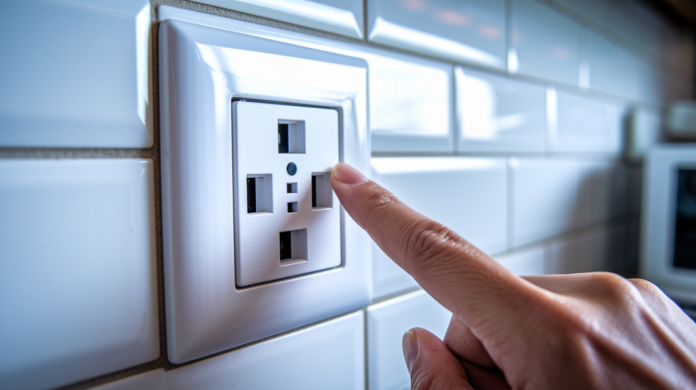

Ever plug in your coffee maker only to have the outlet go completely dead? That minor inconvenience in the morning can throw off your whole routine. The good news is most kitchen outlet failures have simple causes, and a lot of them you can fix yourself in just a few minutes. We’ll walk you through the most common reasons outlets stop working, show you what’s safe to check on your own, and help you spot the warning signs that mean it’s time to call a professional.
Common Causes and Immediate GFCI Reset Solution
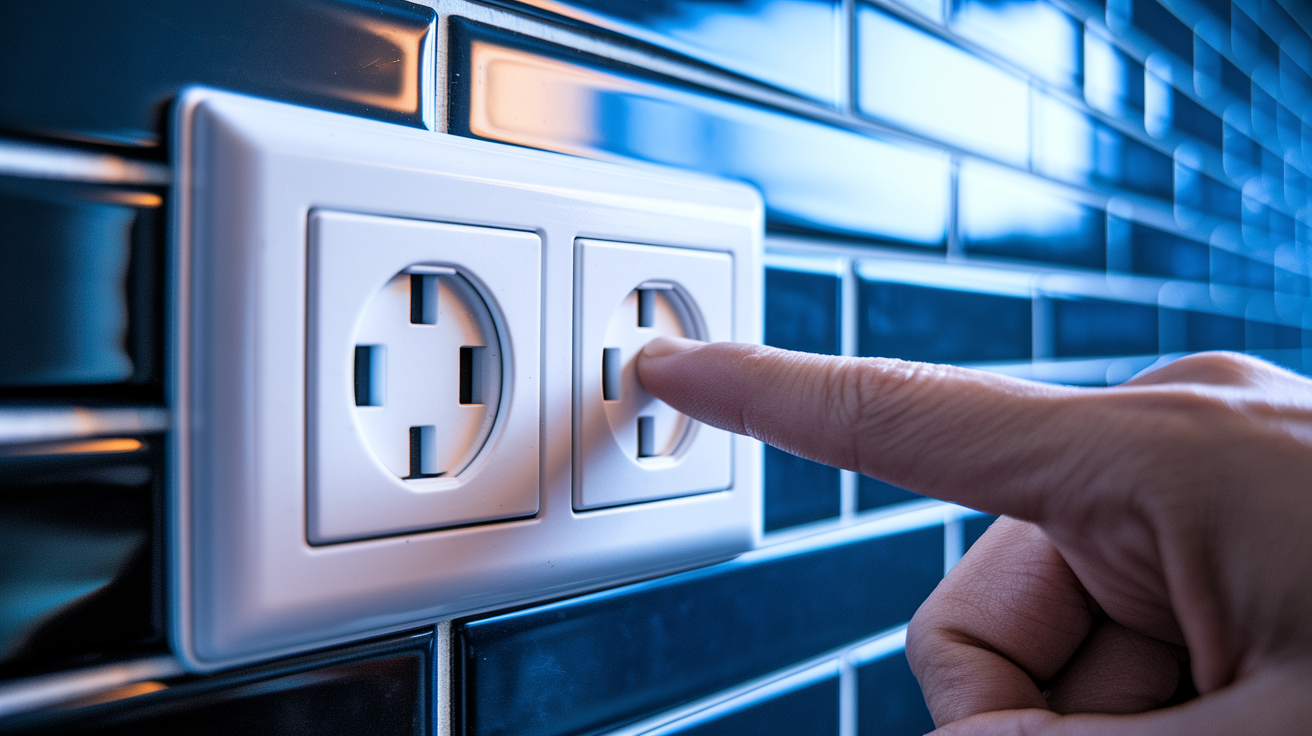
If your kitchen outlet stopped working, you’re not alone. This happens all the time, and there’s a decent chance you can get power back in under a minute.
First thing to check? Whether a GFCI outlet tripped. It’s the most common reason kitchen outlets go dead, and it’s usually an easy fix.
GFCI Reset Procedure:
- Find the GFCI outlets in your kitchen (check countertop outlets and nearby areas)
- Look for a raised reset button in the center of the outlet faceplate
- Press the reset button firmly until it clicks
- Test it by plugging in a phone charger or small appliance
- Check other outlets on the same circuit to make sure power’s restored
GFCI outlets are ground fault circuit interrupter outlets. Building code requires them anywhere near water. Kitchens, bathrooms, laundry rooms, garages, outdoor areas. They’re built to cut power the instant they detect even a tiny electrical imbalance, like what happens when water creates an unintended path for electricity.
You’ll recognize a GFCI by the two small rectangular buttons in the middle. One says “test” and the other says “reset.” When it trips, the reset button pops out slightly. Here’s the tricky part: one GFCI can control multiple outlets on the same circuit. So if your outlet stops working, the GFCI that tripped might be three feet away near the sink. Or around the corner in the pantry. Check every outlet within fifteen feet.
If the GFCI won’t reset or immediately pops back out, that’s it telling you there’s still a problem. Sometimes they need time to dry out after water exposure, like after you cleaned the backsplash or spilled something. Give it a day or two if moisture might be the issue. But if it keeps tripping with no obvious water problem, that’s signaling an electrical fault. Don’t force it. Call someone.
If you’ve checked all the GFCIs in your kitchen and nearby areas and none of them tripped, the problem’s something else. Other common causes:
- Tripped circuit breaker at the electrical panel
- Half hot outlet controlled by a wall switch
- Loose or damaged wire connections
- Burnt out or faulty outlet
- Overloaded circuit from too many appliances
We’ll walk through how to check each of these next. Start with the simplest possibilities first, then move to the ones needing more attention.
Essential Electrical Safety Guidelines for Homeowners
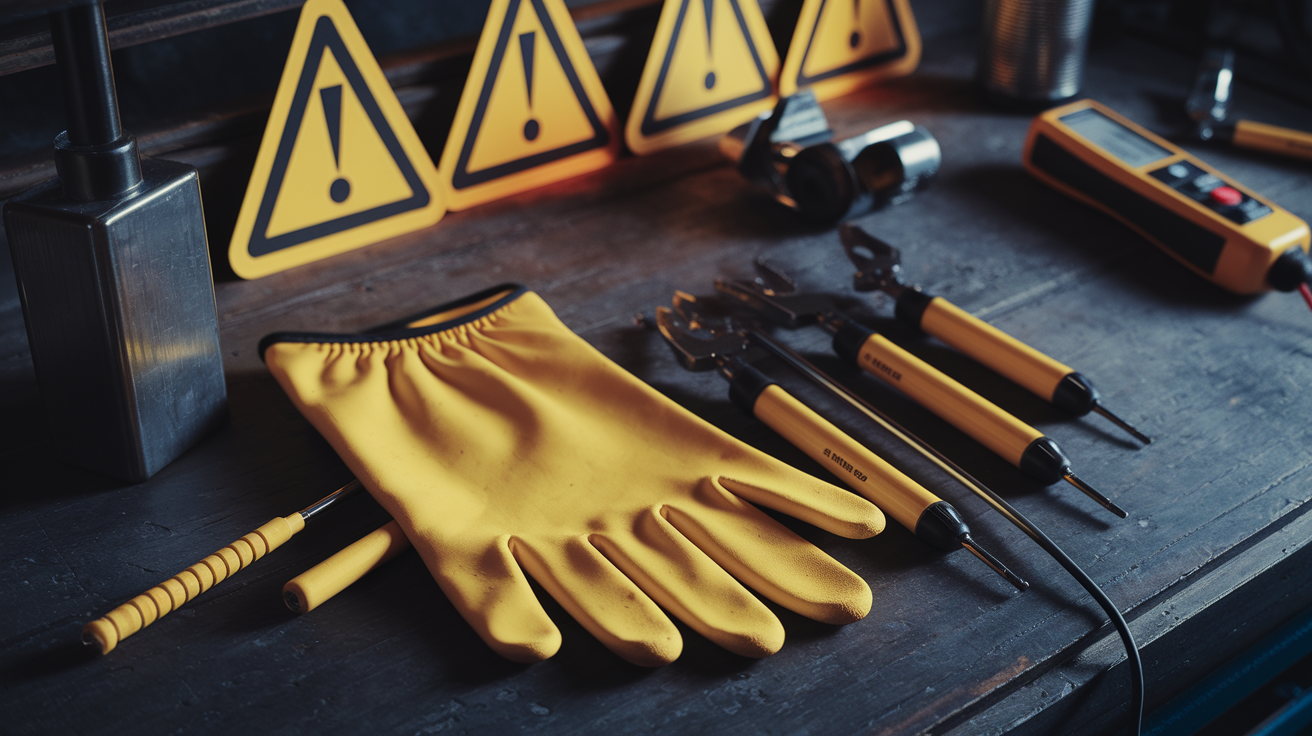
Electricity’s dangerous. Not trying to scare you, just keeping you safe while you figure out what’s going on.
Most basic troubleshooting is safe if you follow some clear rules. You can visually inspect outlets, press reset buttons, and flip breakers without risk. Anything beyond that requires turning off power and knowing what you’re doing.
Safety Rules for Outlet Troubleshooting:
- Always turn off power at the breaker before removing outlet covers
- Never touch wires or terminals with power on
- Use insulated tools when working near electrical components
- Keep your hands completely dry when handling electrical devices
- Don’t work alone on electrical projects
- Wear rubber soled shoes for additional insulation
- Use a voltage tester to confirm power’s off before touching wires
- Call a professional for anything beyond basic resets and visual inspection
Some warning signs mean you should stop troubleshooting immediately and call a licensed electrician. These indicate serious safety hazards, including fire risk. If you see or smell any of these, turn off the breaker controlling that outlet and don’t use it until a professional inspects it.
Dangerous Warning Signs:
- Scorch marks or discoloration around the outlet
- Burning smell near the outlet
- Warm or hot outlet faceplate
- Melted plastic on the outlet cover
- Sparks when plugging in devices
- Crackling or buzzing sounds from the outlet
If you notice any of these, flip the breaker to that circuit to OFF right away. Don’t plug anything into that outlet. Don’t try to use it “just one more time.” An outlet showing these symptoms is a fire hazard and needs immediate professional attention. The repair might be simple, but the risk isn’t worth taking chances.
Checking Your Circuit Breaker and Electrical Panel
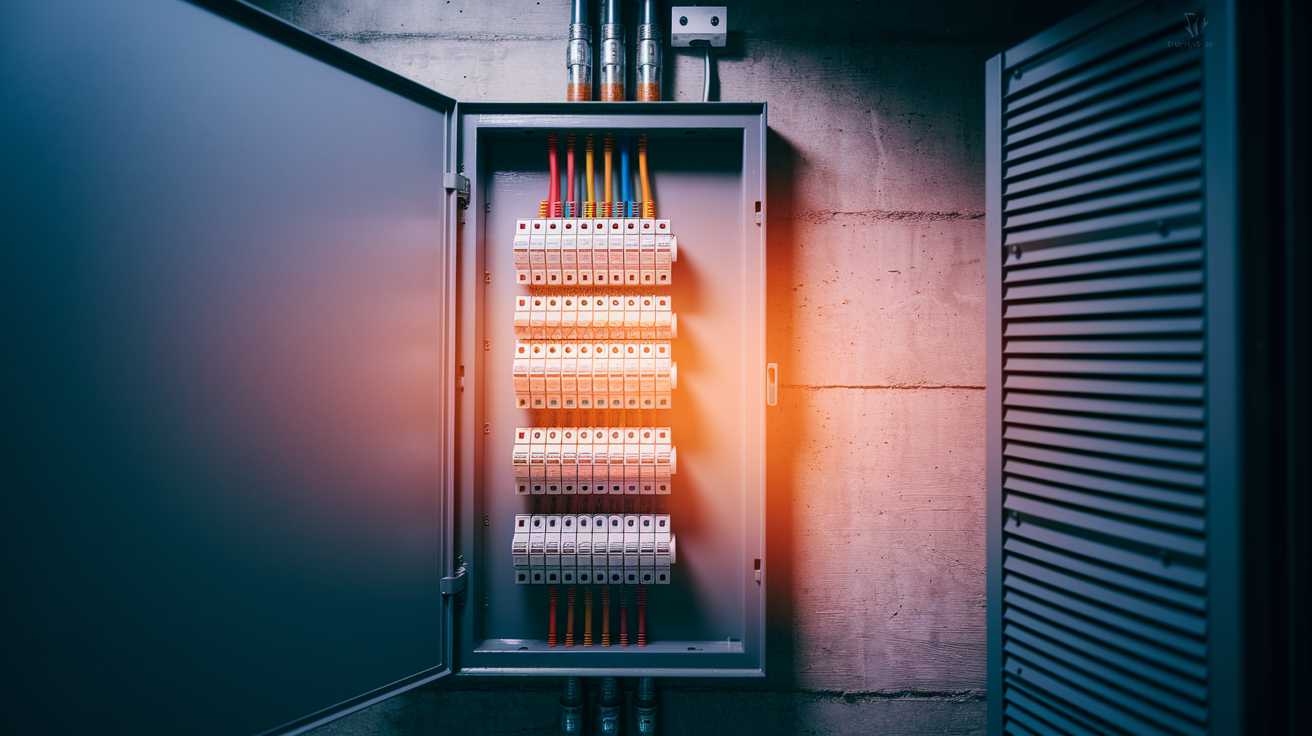
Your electrical panel’s usually in the basement, garage, utility room, or sometimes on an exterior wall. Open the metal door and look at the rows of switches inside.
A tripped breaker doesn’t always flip all the way to OFF. Usually it lands in the middle position, between OFF and ON. Easy to miss if you’re just scanning quickly. Look for any switch not lined up with the others. To properly reset a breaker, flip it all the way to OFF first. You should feel it click. Then flip it back to ON. If it won’t stay in the ON position or immediately flips back to the middle, that breaker’s telling you there’s still a problem on that circuit.
Kitchen circuits are typically 20 amp circuits, and a single breaker might control several outlets. If the breaker looks normal, check whether it feels hot. Wait, don’t actually touch it. Just hold your hand near it. A breaker that’s warm or hot indicates internal damage. Same if the breaker feels loose or wobbly when you flip it. Breakers can fail internally without ever showing a tripped position, and a damaged breaker needs replacement by a licensed electrician. Don’t try to replace a breaker yourself. Working inside the electrical panel is extremely dangerous because the main power lines feeding the panel are always live, even with the main breaker off.
Identifying Half Hot and Switched Kitchen Outlets

Some outlets are controlled by a wall switch, and if that switch is off, the outlet appears dead. These are called half hot or switched outlets, and they’re more common than you’d think.
Typically, only the bottom half of the outlet gets controlled by the switch while the top half stays on all the time. This setup’s common in rooms without overhead lighting, where you’d plug a lamp into the switched outlet. Less common in kitchens, but it does happen, especially for outlets on kitchen islands or breakfast nooks where a table lamp might go.
Try flipping any nearby wall switches while something’s plugged into the outlet. Try both the top and bottom receptacle with a lamp or phone charger. If the outlet suddenly works when you flip a switch, you’ve found your answer. That outlet’s working exactly as designed.
Testing Kitchen Outlets and Appliances to Isolate the Problem
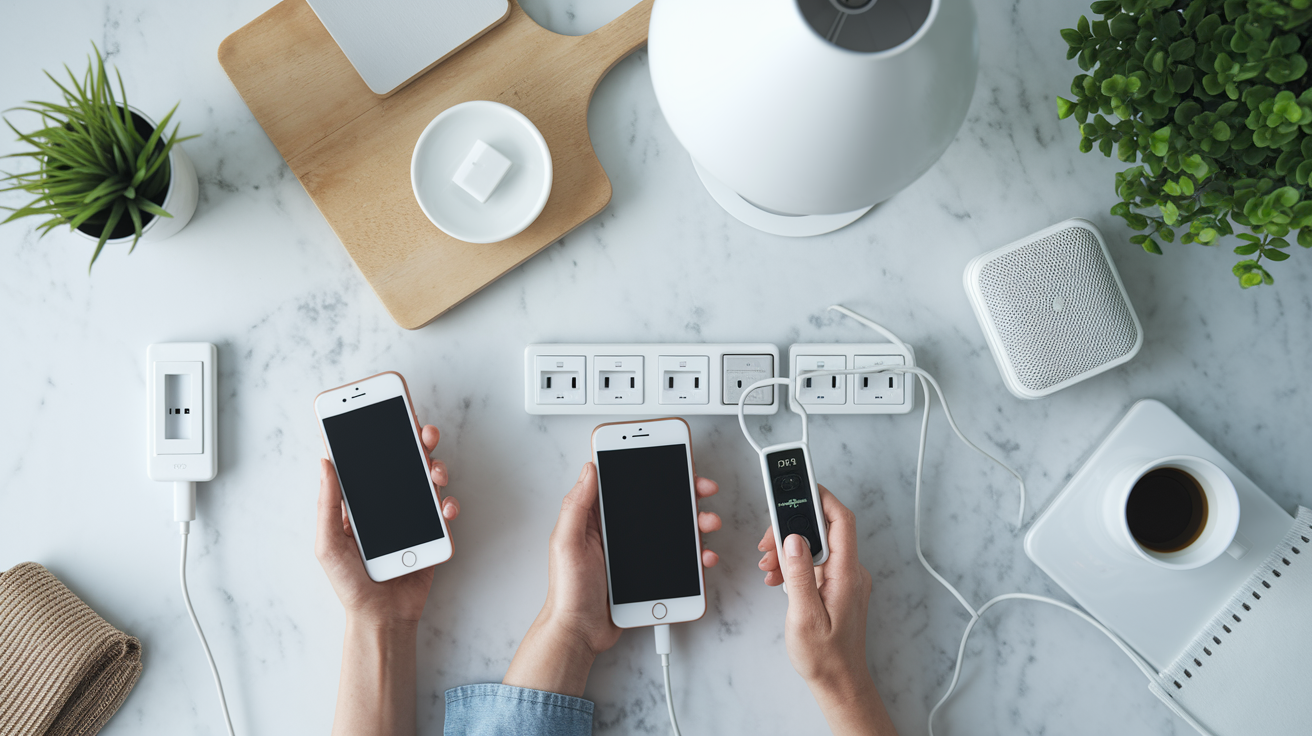
Before assuming the outlet’s broken, confirm that the problem isn’t actually the device you’re trying to plug in. Appliances fail too. It’s surprisingly common to blame the outlet when the coffee maker just quit.
Test the outlet with different devices. Plug in a phone charger, a lamp, a radio, anything small that you know works. Then take the device that wasn’t working and try it in a different outlet. If the device works elsewhere, the outlet’s the problem. If the device doesn’t work anywhere, you just saved yourself a service call.
You can also check the entire circuit by testing other kitchen outlets. If multiple outlets are dead, they’re likely on the same circuit, and the problem’s upstream. Either at the breaker, at a tripped GFCI, or somewhere in the wiring. If only one outlet’s dead, that specific outlet probably needs attention.
Safe Testing Steps:
- Try different appliances in the dead outlet to rule out appliance malfunction
- Test the same appliance in other outlets to confirm it works
- Check all kitchen outlets on the same circuit to map the problem
- Use a three light outlet tester from the hardware store to check outlet wiring
- Note which outlets are affected and their locations for the electrician if needed
Basic outlet testers cost under $10 and show you instantly if an outlet has power and whether the wiring’s correct. They’re worth having around. Voltage testers are also helpful and show whether any electrical current is present. Professional electricians use multimeters that give exact voltage readings, but for basic troubleshooting, a simple tester works fine.
Common Wiring Problems: Overloaded Circuits and Loose Connections

Kitchens put heavy demands on electrical circuits. You’ve got the microwave, toaster, coffee maker, blender, instant pot, air fryer, and maybe an electric kettle, all within reach of the same few outlets. When you run too many high draw appliances at once, you can overload the circuit.
Circuit overload happens when the total electrical draw exceeds what the circuit’s designed to handle. Most kitchen circuits are either 15 amp or 20 amp. Modern building codes often require 20 amp circuits for kitchens and at least two separate circuits for countertop outlets, but older homes might not meet current standards. When you exceed the circuit capacity, the breaker should trip. But sometimes the load’s just high enough to cause problems without quite tripping the breaker, or the breaker itself has degraded and doesn’t trip when it should.
| Kitchen Appliance | Typical Amperage Draw |
|---|---|
| Microwave | 7-13 amps |
| Refrigerator | 3-6 amps |
| Dishwasher | 10-15 amps |
| Toaster | 8-10 amps |
| Coffee Maker | 5-8 amps |
| Electric Kettle | 8-12 amps |
| Garbage Disposal | 5-8 amps |
| Small Countertop Appliances | 3-7 amps |
If you’re running your microwave and toaster at the same time on the same circuit, you’re already pushing 20 amps. Add the coffee maker and you’ve exceeded capacity. The solution might be as simple as spreading your appliance use across different outlets on different circuits. Or it might require an electrician to add dedicated circuits for major appliances.
Loose wire connections are one of the most common causes of dead outlets. Over time, connections can loosen from thermal expansion and contraction, from vibration, or just from age. When outlets get used heavily, plugging things in and pulling them out repeatedly, the outlet can shift slightly in the electrical box. That movement can pull wires loose.
Wiring connections inside outlets happen one of two ways. Wires can be attached to screw terminals on the sides of the outlet, or they can be pushed into slots on the back, called backstab connections. Backstab connections are faster to install but more prone to failure. The proper method is to wrap the wire around the screw terminal. Black hot wire to the brass screw, white neutral wire to the silver screw, and bare copper or green ground wire to the green screw on the bottom.
If you suspect loose wiring, turn off power at the breaker before removing the outlet cover. Use a voltage tester to confirm the power’s off. Even with the power off, working with wire connections requires knowing which wire is which and how to properly secure them. If you’re not comfortable with that or don’t have experience, call a professional. Loose connections can cause sparks, overheating, and electrical fires.
When to Replace an Outlet and Professional Repair Decisions
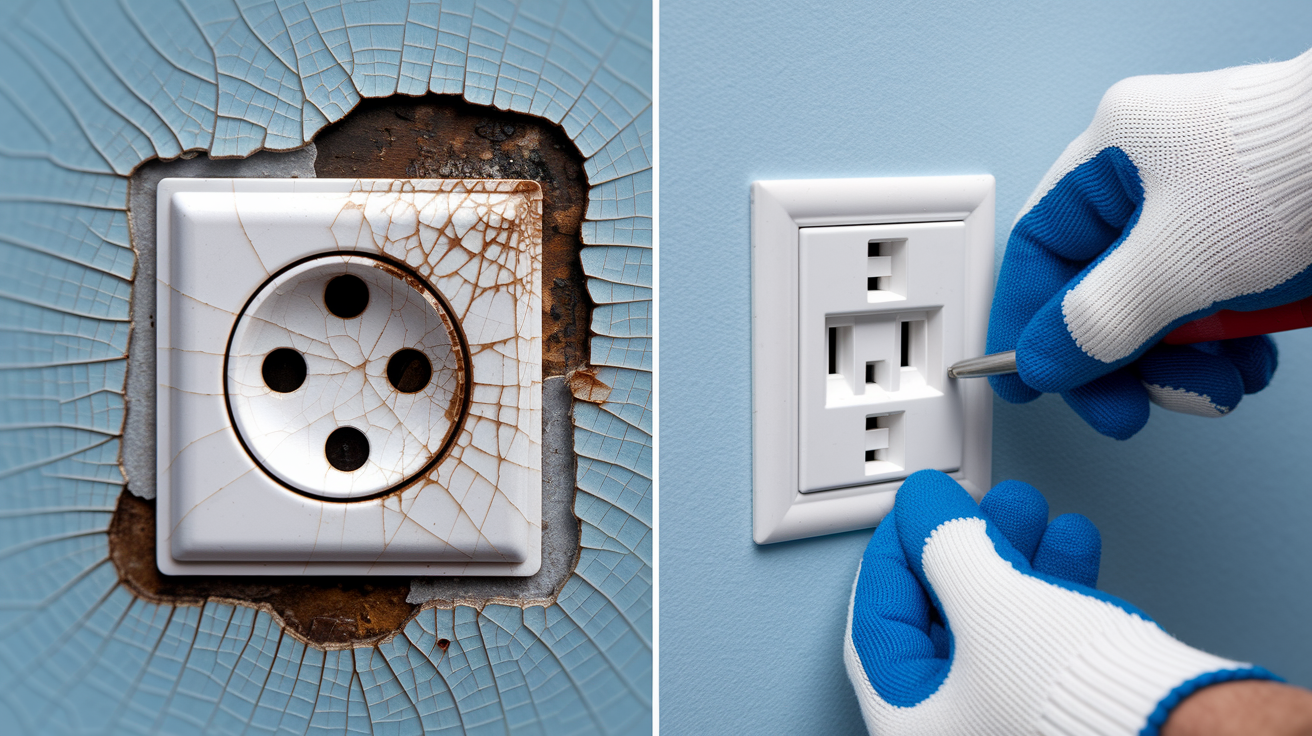
Outlets don’t last forever. They wear out from repeated use, especially in high traffic areas like kitchens. An outlet that’s been used daily for fifteen or twenty years has been plugged into and unplugged from thousands of times.
Sometimes the outlet itself just fails. The internal contacts wear down, the receptacle no longer grips plugs firmly, or internal components burn out. When that happens, replacement’s the answer. A standard outlet replacement by a licensed electrician typically costs $50 to $150. GFCI outlet installation runs higher, around $150 to $250, because GFCI outlets cost more and take slightly longer to install.
Signs Your Outlet Needs Replacement:
- Plugs don’t stay in firmly or fall out easily
- Visible cracks or damage on the outlet faceplate
- Outlet is 15 to 20 years old or older
- Recurring problems even after reset attempts
- Two prong outlet without ground hole in older home
Modern building code requires tamper resistant outlets and GFCI protection in kitchens. Tamper resistant outlets have internal shutters that prevent children from inserting objects into the slots. If you’re replacing an outlet anyway, it makes sense to upgrade to current code standards.
You can purchase outlets at any hardware store, but installation should be done by a licensed electrician unless you have electrical experience and understand local code requirements. Improper electrical work creates safety hazards, can affect your home insurance, and can cause problems when you sell your home.
| Task | DIY-Safe | Requires Licensed Electrician |
|---|---|---|
| Resetting GFCI outlet | Yes | No |
| Resetting circuit breaker | Yes | No |
| Testing outlets with outlet tester | Yes | No |
| Replacing outlet | Only with electrical experience | Recommended |
| Diagnosing wiring problems | No | Yes |
| Repairing loose wire connections | No | Yes |
| Adding new circuits | No | Yes |
Professional electricians carry liability insurance and guarantee their work. They’ve got the training and equipment to diagnose problems quickly and fix them according to National Electrical Code standards and local regulations. Electrical permits are required for most electrical work beyond simple replacements, and permit requirements vary by location. When getting estimates, ask whether the quote includes permit fees and what warranty or guarantee comes with the work. A reputable electrician will be happy to explain the process and timeline.
Preventing Future Kitchen Outlet Problems

Most outlet problems are preventable with a little awareness and routine maintenance. Pay attention to how you use your kitchen outlets and address small issues before they become bigger ones.
The biggest preventable cause of outlet problems is overloading circuits. Spread high draw appliances across different outlets and avoid running your microwave, toaster, and coffee maker all at once. If you find yourself constantly unplugging things to make room for other things, you probably need more circuits, not more power strips. Use surge protectors for sensitive electronics like computers or expensive appliances, but don’t daisy chain power strips together. That’s a fire hazard and often violates electrical code.
Keep outlets dry. Wipe up spills immediately and be careful when cleaning around outlets. If water gets into an outlet, turn off the breaker and let it dry completely before restoring power. GFCI outlets may need a day or two to dry out before they’ll reset. Test your GFCI outlets monthly by pressing the test button. The power should cut off immediately. Then press reset to restore power. This simple test confirms the GFCI’s working properly.
Prevention Tips:
- Don’t overload outlets with multiple high draw appliances simultaneously
- Use surge protectors for sensitive electronics
- Avoid daisy chaining power strips
- Keep outlets dry and away from water sources
- Test GFCI outlets monthly using test and reset buttons
- Address flickering lights or warm outlets immediately before they fail
- Schedule a professional electrical inspection every 3 to 5 years
If you notice flickering lights, outlets that feel warm, or breakers that trip occasionally, don’t ignore those signs. They’re early warnings that something needs attention. A professional electrical inspection every few years can catch problems before they cause failures. For older homes, an inspection’s especially valuable because electrical standards have changed significantly over the decades, and upgrades might improve both safety and function.
Final Words
A kitchen outlet not working usually points to a tripped GFCI or breaker, both easy fixes you can handle in minutes.
But if you’re seeing scorch marks, feeling heat, or dealing with outlets that won’t stay reset, shut off the power and call a pro. Those are safety issues, not DIY moments.
For everything else, walk through the checks: test the GFCI, flip the breaker, try different devices, look for switched outlets. Most problems show themselves pretty quickly once you know where to look.
And if your kitchen keeps tripping or you’re running too many appliances on one circuit, it’s worth getting an electrician’s take on your setup.
FAQ
Why is my outlet not working but the breaker is not tripped?
Your outlet may not be working even when the breaker hasn’t tripped because a GFCI outlet somewhere on the same circuit has tripped, cutting power to all downstream outlets without affecting the main breaker.
Another common reason is loose wire connections inside the outlet itself. Over time, wires can work free from their terminals due to thermal expansion and contraction, interrupting the power supply even when the breaker remains on. Burnt-out outlets, half-hot outlets controlled by wall switches, and backstab wiring failures can all cause dead outlets without tripping the breaker since they don’t pull enough current to trigger the safety mechanism.
How do I reset my kitchen outlet?
To reset your kitchen outlet, first locate any GFCI outlets in your kitchen, which have small test and reset buttons in the center of the faceplate. Look for a raised reset button, then press it firmly until it clicks into place. After resetting, plug in a small appliance or phone charger to confirm power has been restored to the outlet.
If the reset button won’t stay in or immediately pops back out, the GFCI detected a fault and shouldn’t be forced. Wait 1 to 2 days if the outlet was recently exposed to moisture from storms or cleaning, then try resetting again.
How do I know if my outlet is blown?
You can tell if your outlet is blown by looking for scorch marks or discoloration around the outlet opening, a burning smell when you’re near the outlet, or a warm or hot faceplate. Plugs that don’t grip firmly or fall out easily also indicate internal damage. Outlets that spark when you plug things in or make crackling sounds are definitely damaged and unsafe.
A blown outlet often won’t provide power even after you’ve reset the GFCI and checked the breaker. If testing the outlet with different devices in both the top and bottom receptacles produces no power, and neighboring outlets work fine, the outlet itself has likely failed internally.
Do I need an electrician to replace an electrical outlet?
You need an electrician to replace an electrical outlet if you’re uncomfortable working with electricity, if the outlet shows signs of burning or melting, or if local codes require permitted work and inspections. Licensed electricians follow National Electrical Code standards and carry liability insurance.
While some homeowners with electrical knowledge can handle basic outlet replacement, professionals have the tools and expertise to diagnose underlying wiring problems, ensure proper connections, and guarantee the work meets current safety codes including GFCI and tamper-resistant requirements now mandatory in kitchens.